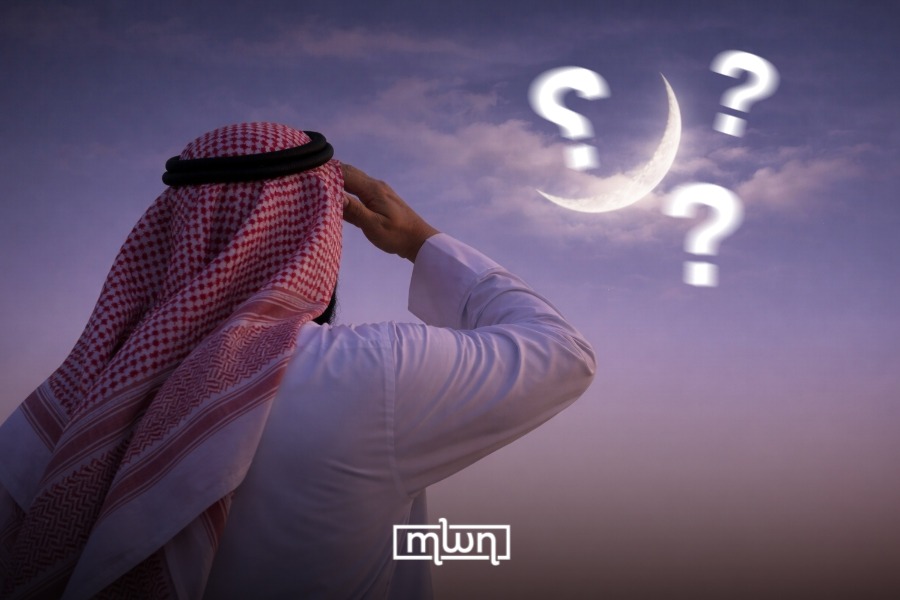
Why Saudi Arabia's Moon Sighting Shapes Global Ramadan
The arrival of Ramadan is a moment of profound spiritual significance for over a billion Muslims worldwide. It heralds a month of fasting, intense prayer, reflection, and community gathering. But before the first fast can commence, a pivotal event must occur: the sighting of the crescent moon. In this crucial annual determination, the
Saudi Arabia Ramadan Moon Sighting holds unparalleled weight, influencing the start of the holy month for countless communities across the globe.
While the exact start date of Ramadan can sometimes vary regionally, Saudi Arabia, as the custodian of Islam's two holiest cities, Makkah and Madinah, often serves as the central point of reference. Its announcement sets a precedent that many countries and Muslim populations look to, creating a ripple effect that unites communities in anticipation and preparation. For instance, in 2026, the Kingdom's official declaration of Wednesday, February 18, as the first day of Ramadan, following verified crescent moon sightings, instantly informed the schedules of millions.
The Sacred Authority: Why Saudi Arabia Leads the Way
Saudi Arabia's preeminence in determining the start of Ramadan is deeply rooted in its unique religious standing. Home to the Kaaba in Makkah, the spiritual heart of Islam, and the Prophet's Mosque in Madinah, the Kingdom holds immense symbolic and religious authority. This spiritual centrality translates into a practical leadership role in matters pertaining to the Islamic calendar, particularly the commencement and conclusion of the holy month.
The sanctity of Makkah and Madinah means that Saudi Arabia's religious pronouncements carry significant weight, not just for its own citizens, but for Muslim communities spanning continents. When the Supreme Court of Saudi Arabia makes its declaration, it's not just a local announcement; it's a signal heard and acted upon from the Middle East to South Asia, Europe, and beyond. This established tradition provides a unified point of reference for many, helping to synchronize the spiritual journey of Ramadan across diverse cultures and geographies. The rigorous, systematic approach employed by Saudi authorities further reinforces trust and adherence to their pronouncements.
Unveiling the Crescent: Saudi Arabia's Meticulous Sighting Process
The process behind the
Saudi Arabia Ramadan Moon Sighting is a testament to both religious tradition and meticulous verification. It's a structured system designed to ensure accuracy and consensus, overseen by the esteemed Supreme Court of Saudi Arabia.
Each year, as the 29th day of Sha’ban (the month preceding Ramadan in the Islamic calendar) approaches, the Supreme Court issues a public call. This invitation urges Muslims across the Kingdom – from urban centers like Riyadh, Jeddah, Makkah, and Madinah to rural areas – to observe the western sky immediately after sunset (Maghrib prayers) for the faintest sliver of the new crescent moon.
Trained observers, including religious scholars, astronomers, and dedicated volunteers, participate in this critical visual search. If the crescent is successfully sighted, testimonies are collected and submitted to regional courts. These reports are not accepted lightly; they undergo a stringent credibility assessment. Authorities then cross-reference these visual reports with precise astronomical data. This dual-verification method ensures that the official declaration is based on concrete observation confirmed by scientific understanding, minimizing error and bolstering confidence in the announcement.
Once the Supreme Court is satisfied with the veracity of the sightings and supporting data, it makes the official declaration. This meticulous approach ensures that the start of Ramadan is determined with the utmost care and religious integrity. For example, for Ramadan 2026, intense observation efforts on February 17th led to the verified sighting, allowing the Supreme Court to officially declare February 18th as the first day of fasting. To delve deeper into this intricate procedure, you can read our comprehensive guide:
Step-by-Step: Saudi Arabia's Ramadan Moon Sighting Process.
A Ripple Effect: How Saudi's Announcement Echoes Globally
The confirmation of the crescent moon in Saudi Arabia doesn't merely inform its own citizens; it initiates a significant ripple effect across the global Muslim community. For millions, the Saudi announcement serves as the definitive signal for the commencement of Ramadan.
Neighboring Gulf countries, such as the UAE, Qatar, and Kuwait, frequently align their fasting schedules with Saudi Arabia's pronouncement. This regional synchronization reflects shared cultural ties, geographical proximity, and a common religious reverence for the Kingdom's authority. Beyond the immediate region, Muslim communities in South Asia, parts of Africa, Europe, and North America also closely monitor the Saudi Supreme Court's declaration. For these communities, often in areas where local sighting can be challenging or where a unified reference point is preferred, Saudi Arabia's decision provides clarity and a sense of collective spiritual unity.
The practical implications of this global alignment are vast. Once the crescent is confirmed, mosques worldwide begin to finalize their schedules for Taraweeh prayers (special nightly prayers performed during Ramadan), Iftar (the breaking of the fast), and Suhoor (the pre-dawn meal). Families make their preparations, communities organize charitable activities, and individuals mentally and spiritually prepare for the month-long observance. For detailed information on specific dates, refer to our article:
Ramadan 2026: Saudi Arabia Confirms Feb 18 Start.
While Saudi Arabia's decision holds immense sway, it's also important to acknowledge that not all Muslim countries follow suit. Variations in lunar visibility due to geographical location, coupled with differing interpretations of Islamic jurisprudence regarding moon sighting (some prioritize purely local visual sighting, others astronomical calculations, and some a hybrid approach), can lead to different start dates. This was evident in 2026, where several countries in Asia and other parts of the MENA region declared February 19th as their first day of Ramadan. This diversity, however, doesn't diminish the significance of Saudi Arabia's role; rather, it highlights the rich tapestry of Islamic practice while still recognizing the Kingdom's enduring influence.
Navigating the Nuances: Understanding Diverse Approaches
The slight variations in Ramadan start dates seen across the globe are a fascinating aspect of Islamic practice, stemming from a combination of geographical, methodological, and jurisprudential factors.
*
Geographical Differences: The new crescent moon's visibility is highly dependent on location. What's visible in Saudi Arabia may not be visible in Southeast Asia or parts of North America on the same night, due to factors like sunset times, atmospheric conditions, and the moon's position relative to the horizon.
*
Methodological Interpretations: While Saudi Arabia employs a rigorous system combining visual sighting with astronomical verification, other regions may adhere strictly to local visual sighting only, or, conversely, rely solely on pre-calculated astronomical tables. Each approach has its basis in Islamic scholarship and tradition.
*
Jurisprudential Schools: Different schools of thought within Islam have historically held varying opinions on whether a sighting in one locality is sufficient for all Muslims worldwide, or if local sightings are mandatory.
For individual Muslims, the key practical advice is to follow the announcements of their local religious authorities, mosques, or the recognized Islamic council in their country or region. This ensures community unity and adherence to local religious leadership. Embracing this diversity while appreciating Saudi Arabia's central role fosters a deeper understanding of the global Muslim community.
Conclusion
The
Saudi Arabia Ramadan Moon Sighting remains a pivotal event on the global Islamic calendar, embodying a powerful blend of tradition, religious authority, and meticulous practice. As the guardian of Islam's holiest sites, the Kingdom's pronouncement on the crescent moon's appearance for Ramadan shapes the spiritual rhythm for millions, fostering a profound sense of unity and shared purpose. While regional variations in start dates underscore the beautiful diversity of Islamic observance, Saudi Arabia's rigorous process and enduring influence ensure its central role in heralding the arrival of this blessed month. As Muslims worldwide anticipate the spiritual blessings of Ramadan, the vigilant gaze towards the Saudi sky continues to connect hearts and minds in collective devotion.